
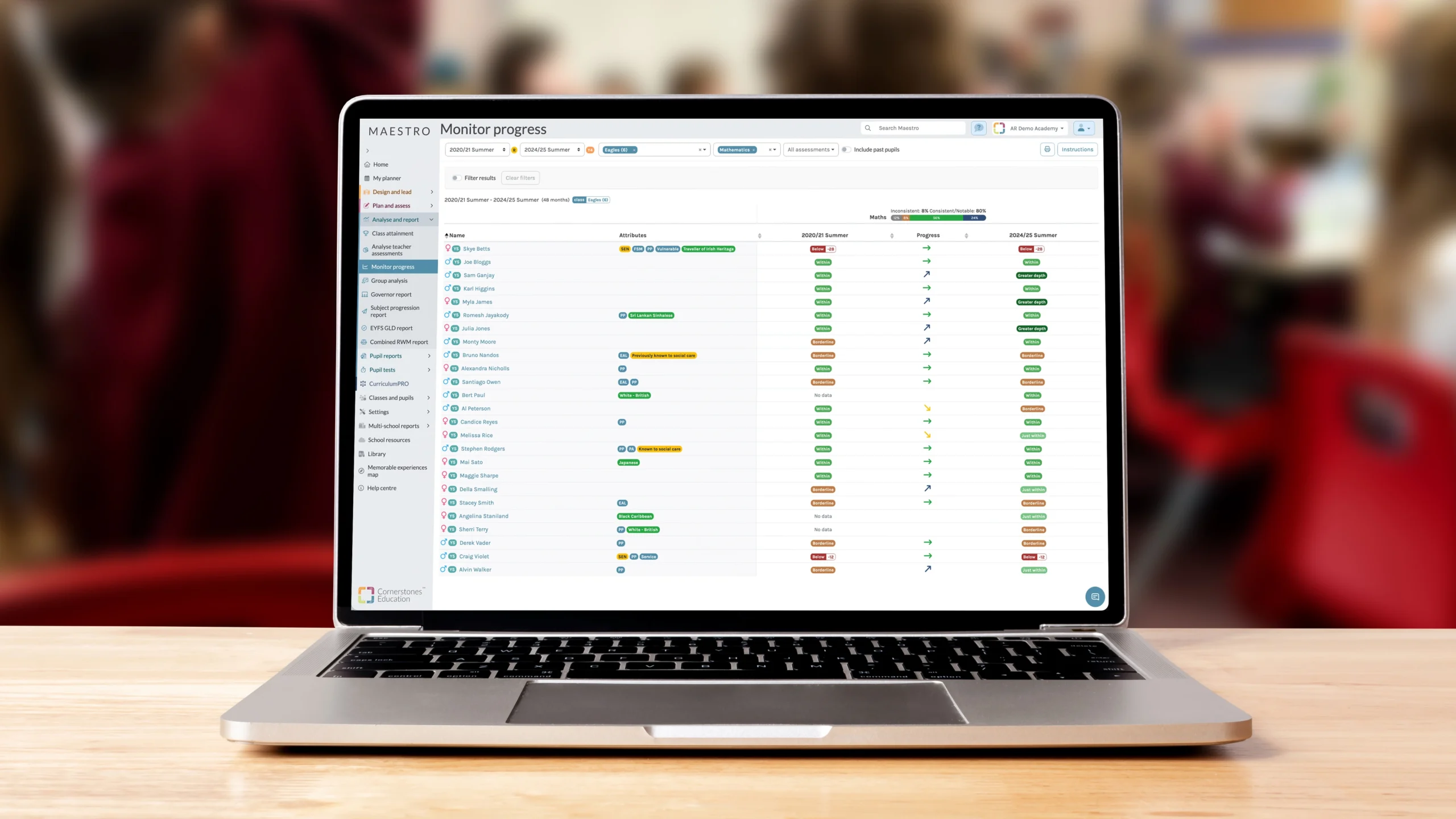
Primary curriculum assessment
Curriculum-integrated assessment on our digital platform that informs teaching, reduces workload and gives leaders the visibility they need.
Assessment should serve teaching. Not the other way around.
Most schools are using an assessment system that sits outside their curriculum rather than it being integrated at every step. Teachers enter data into one place, plan lessons in another and report from a third. The result is a lot of work that produces a lot of numbers, but very little that actually helps a teacher decide what the needs of the children in their class are.
This is what assessment looks like when it has been designed as a compliance tool rather than a teaching tool. And it is what far too many primary schools currently have in place.
Maestro’s primary school assessment tools are different. It’s built directly into the Cornerstones Curriculum meaning teachers plan, teach and assess in the same system allowing the data that matters to build automatically. This removes the need to enter data twice, chase it down or translate it into different formats.


What integrated assessment makes possible
When assessment is integrated with the curriculum, three things change.
Teachers stop spending time on data entry and start spending time on the insight that data gives them. They can see at a glance which children understood Friday’s lesson, which need revisiting and which are ready to go further. That picture builds in real time, lesson by lesson, without any additional admin.
Subject leaders get visibility of their subject across every year group without having to request data, chase responses or compile spreadsheets. They can see progression, identify gaps and take action, all from a single view.
Senior leaders and headteachers get the school-wide picture they need to lead with confidence. They have access to the governor-ready reports they need at the click of a button, not at the end of a half-term data collection exercise.
Built for the realities of primary school assessment
Four reasons why schools choose the assessment on our digital platform, Maestro.
Does it satisfy Ofsted's expectations?
The new Ofsted framework expects schools to demonstrate that assessment is embedded in teaching and informs what happens next in the classroom. Maestro's curriculum-integrated assessment does exactly that. Every assessment activity is connected to the curriculum content it relates to, giving inspectors a clear and coherent picture of how assessment is used to support learning rather than simply record it.
Will it reduce workload or add to it?
Maestro assessment is built into the same platform teachers use to plan and deliver the curriculum. There are no separate systems to log into, no data to transfer between platforms and no additional tracking tools to maintain. Assessment happens as part of teaching, which means the insight is there without the extra admin.
How does it connect to the curriculum?
Every assessment activity on Maestro is directly linked to the curriculum content being taught. When a teacher assesses a child's understanding of a concept, that assessment sits alongside the lesson it came from, the project it belongs to and the progression framework it maps to. Nothing is disconnected. Everything is in context.
What can leaders actually see?
Maestro gives every leader in your school a different but connected view. Class teachers see their class. Subject leaders see their subject across every year group. Senior leaders see the whole school. And the governor report is generated automatically from the same data. Everyone is looking at the same picture, in real time, without anyone having to compile it.
See Maestro assessment in action
Book a free demo and we’ll show you exactly how assessment works on Maestro, from a teacher marking a lesson through to a governor report generated automatically from the same data.
I really like the fact that assessment is tied in. We used a different assessment platform years ago. Maestro makes it simpler having it all on one platform and is a big selling point for me when I've got a really tight budget. I can say 'Instead of paying £6,000 for a tracking system and buying a curriculum, it's combined and cheaper'. It's value for money.

James Foxwell
Explore the assessment tools
A closer look at the assessment features built directly into Maestro.
Assessment tools
Record learningRecord learning to support accurate teacher assessment, directly within the platform and connected to the curriculum content being taught. No separate systems, no data transfer, no duplication.
Quizzes and testsAccess and record outcomes from low-stakes quizzes and more formal tests, all linked to the curriculum content they relate to. Results feed directly into the wider assessment picture without any additional admin.
Termly assessmentSimple, straightforward input of foundation and core subject termly teacher assessments. Designed to be quick to complete and immediately useful, giving leaders an up-to-date picture of attainment across the school at every point in the year.
Analysis and reportingA full analysis and reporting package with standardised scores, giving teachers, subject leaders, senior leaders and governors the data they need in the format they need it. Everything generated from the same source, with no manual compilation required.
Wonde integrationEffortless, free of charge integration with your MIS through Wonde, so pupil data flows automatically into Maestro without any manual entry. Setup is straightforward and ongoing maintenance is minimal.
Individual to whole schoolAssess what your school policy dictates, whether that is at a class, cohort or individual level, in every or certain subjects. Teachers can create learning groups to make formative assessment impactful and manageable.
Analysis and reporting
Class attainmentAn instant class-level snapshot of attainment and curriculum coverage, giving teachers and subject leaders a clear picture of where each child is without having to request data or compile it from elsewhere.
Subject progressionAll assessment data for a class or cohort within a single subject, at a glance. Subject leaders can see progression, identify gaps and take action without leaving the platform.
Pupil reportsFully customisable written reports that pull real assessment data through automatically, saving teachers significant time every reporting cycle and ensuring reports reflect what children have actually learned.
Governor reportA governor-ready curriculum and attainment report generated at the click of a button, directly from the assessment data already in the system. No manual compilation, no chasing data, no additional work.
Group analysisCompare attainment and progress across classes, cohorts or pupil groups, so leaders can identify patterns quickly and act on them with confidence.
Monitor progressTrack any class, cohort or individual pupil between two assessment points, giving a clear and accurate picture of progress over time without any additional data entry.
Built for the new Ofsted framework
The new Ofsted inspection framework and the Curriculum and Assessment Review both place significant demands on how primary schools use assessment data, evaluating schools across multiple areas, several of which depend directly on the quality and integration of your assessment approach.
The curriculum and teaching standards expect assessment to be embedded in daily classroom practice and used to inform what is taught next. The achievement standards expect leaders to demonstrate that pupils are making progress across the curriculum over time. The leadership and governance standards expect senior leaders to have clear oversight of curriculum quality and pupil outcomes across the school.
Maestro is designed to provide evidence for all three standards. Assessment is embedded in every lesson, progress is tracked automatically over time, and the leadership view is always current, always accurate and always ready to share.
Read our guide to the new Ofsted framework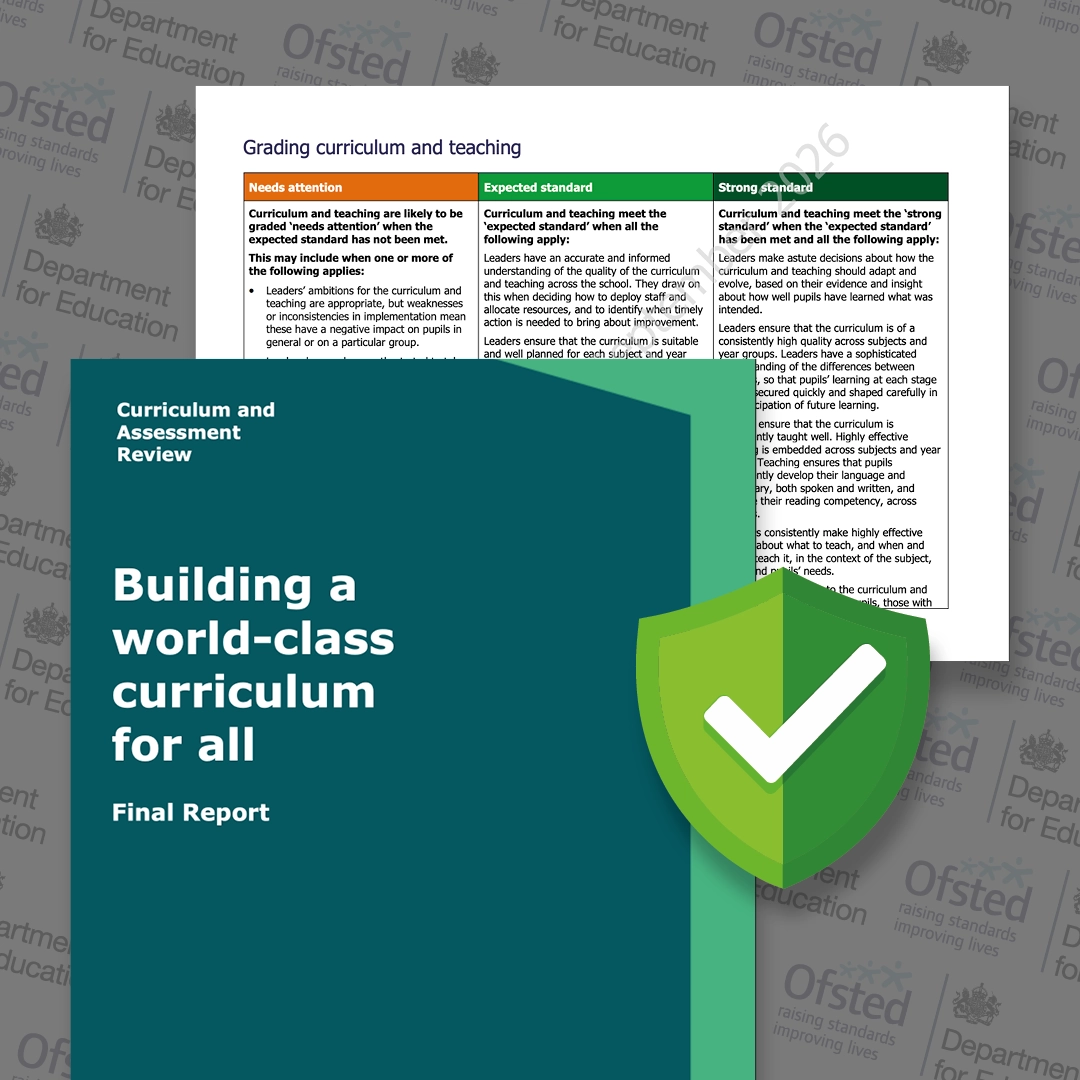
What schools say about assessment on Maestro
It makes no sense to use a separate assessment tool, we are not overwhelming staff with workload and Maestro helps them understand how to move to the next step in teaching.
Read their story
Sarah Rudall
The 'lesson taught' feature is an invaluable formative tool, which teachers are finding meaningful to their teaching. We can see the journey the children are on, identify what they have achieved and what they need to do next. This tool is also useful for tracking children's absence from specific lessons.
Read their story
Carrie Kiselis
The assessment side of Maestro is incredibly useful for us. For example, we can see if our year 4 girls are on a par with other year 4 children nationwide.
Read their story
Sarah Davies
Assessment that works for your school, not against it.
Book a free demo and see how Maestro’s integrated assessment suite can give your teachers more time, your leaders more insight and your governors the evidence they need.