
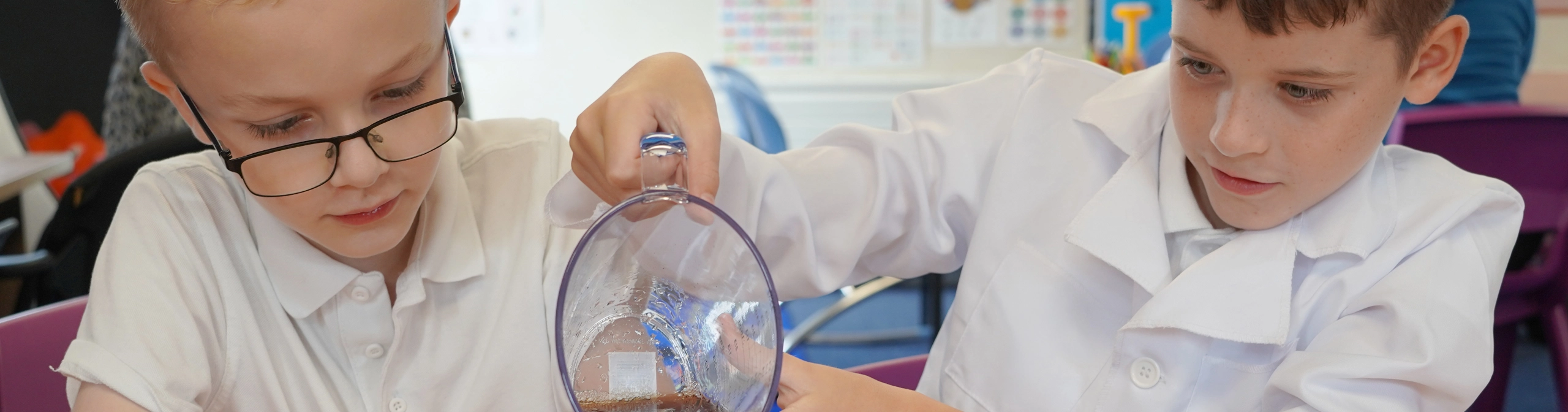
Working scientifically (KS1 – KS2)
Working scientifically is the strand that turns science content into actual science. It isn’t taught on its own, but it runs through every topic in every year group, and knowing what it asks for at each stage is what keeps enquiry purposeful rather than incidental. Here’s what the curriculum expects.
What children learn about working scientifically at KS1 and KS2
What the national curriculum expects
Working scientifically is statutory in every year group, but the curriculum is explicit that it must always be taught through and clearly related to substantive science content rather than as a separate topic. At KS1 pupils should ask simple questions, observe closely using simple equipment, perform simple tests, identify and classify, use observations to suggest answers, and gather and record data. Across KS2 this develops into planning different types of enquiry, controlling variables where necessary, taking accurate measurements, recording results using scientific diagrams, keys, tables and graphs, and drawing conclusions supported by evidence.
Key knowledge and concepts
Within this strand, children build the skills that make every other science topic work:
Asking questions
Turning curiosity into a question that can be answered
Types of enquiry
Fair tests, observation over time, pattern seeking, classifying and research
Planning an enquiry
Deciding what to change, what to measure and what to keep the same
Variables
Identifying and controlling what varies in a test
Taking measurements
Choosing equipment, and measuring accurately and repeatedly
Recording results
Tables, keys, scientific diagrams, bar charts and line graphs
Drawing conclusions
Using evidence to answer the original question
Presenting findings
Explaining results, and using scientific vocabulary with confidence
Where this topic sits within KS1 and KS2
Working scientifically isn’t a unit and isn’t taught in isolation. It’s statutory in every year group from Year 1 to Year 6 and is designed to be taught through the substantive content of every other science topic. The expectations build steadily, from simple tests and observations at KS1 to controlled variables and line graphs by Year 6.
How to access this topic
Working scientifically doesn’t sit on its own in the curriculum. The Cornerstones science curriculum is fully sequenced from EYFS through Year 1 to Year 6, so you can see what comes before, what follows and how the whole picture fits together. We’ve done the thinking, so your planning time goes into teaching, not sequencing.
Full curriculum
Subject curriculum
Quick Teach Individual lessons and resources for supplementing what you already teach.

Ready to bring the wider curriculum to life?
See how the full Cornerstones Science Curriculum sequences topics like this one across every year group.