
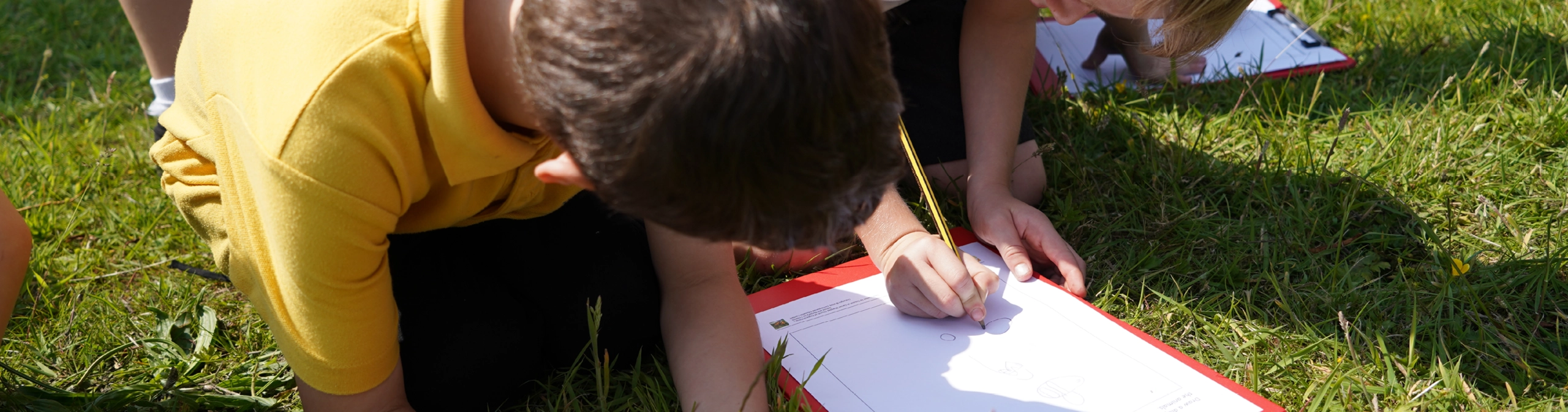
What children learn about fieldwork at KS1 and KS2
What the national curriculum expects
Fieldwork appears in geographical skills and fieldwork at both key stages. At KS1, pupils should use simple fieldwork and observational skills to study the geography of their school and its grounds and the key human and physical features of its surrounding environment. At KS2, pupils should use fieldwork to observe, measure, record and present the human and physical features in the local area using a range of methods including sketch maps, plans and graphs, and digital technologies.
Key knowledge and concepts
Within this topic, children build the skills that make fieldwork purposeful:
Observing
Looking carefully, and knowing what to look for
Asking geographical questions
Framing a question fieldwork can actually answer
Measuring and recording
Collecting accurate data in the field
Sketch maps
Drawing what you see, and annotating it usefully
Plans and symbols
Representing a place accurately from above
Graphs and charts
Presenting fieldwork data clearly
Digital technologies
Using cameras, apps and digital mapping in the field
Drawing conclusions
Turning what you collected into an answer
Where this topic sits within KS1 and KS2
Fieldwork is statutory in both key stages but isn’t a standalone unit. It’s designed to be taught through other geography topics, most naturally alongside maps, settlements and land use, and any study of the local area. Expectations build from simple observation at KS1 to measuring, recording and presenting data by upper KS2.
How to access this topic
Fieldwork doesn’t sit on its own in the curriculum. The Cornerstones geography curriculum is fully sequenced from EYFS through Year 1 to Year 6, so you can see what comes before, what follows and how the whole picture fits together. We’ve done the thinking, so your planning time goes into teaching, not sequencing.
Full curriculum
Subject curriculum
Quick Teach Individual lessons and resources for supplementing what you already teach.

Ready to bring the wider curriculum to life?
See how the full Cornerstones Geography Curriculum sequences topics like this one across every year group.